Follow us on :

Reaching the right audience is key to success in the marine industry. A well-curated boat owners mailing list helps businesses connect with individuals who are actively interested in boating, from casual enthusiasts to high-value buyers. With accurate and targeted data, companies can deliver more relevant messages and improve overall campaign performance.
In 2026, data-driven marketing is more important than ever. Using reliable contact information allows businesses to increase engagement, reduce wasted efforts, and build meaningful connections with the right prospects.
A boat owners mailing list is a structured database that contains contact details of individuals who own or are interested in boats. It typically includes email addresses, phone numbers, and mailing addresses, along with insights like location and preferences.
Such data helps businesses segment audiences and create more personalized marketing campaigns.
As competition increases, generic marketing approaches are becoming less effective. Businesses need accurate and targeted data to stand out and capture attention. Using the right data helps brands connect with the right audience at the right time and achieve better marketing outcomes.
Accurate data helps identify high-intent buyers who are more likely to engage and convert, allowing businesses to focus on quality leads instead of a broad audience.
With detailed insights, businesses can create customized messages that align with customer preferences, improving the overall user experience.
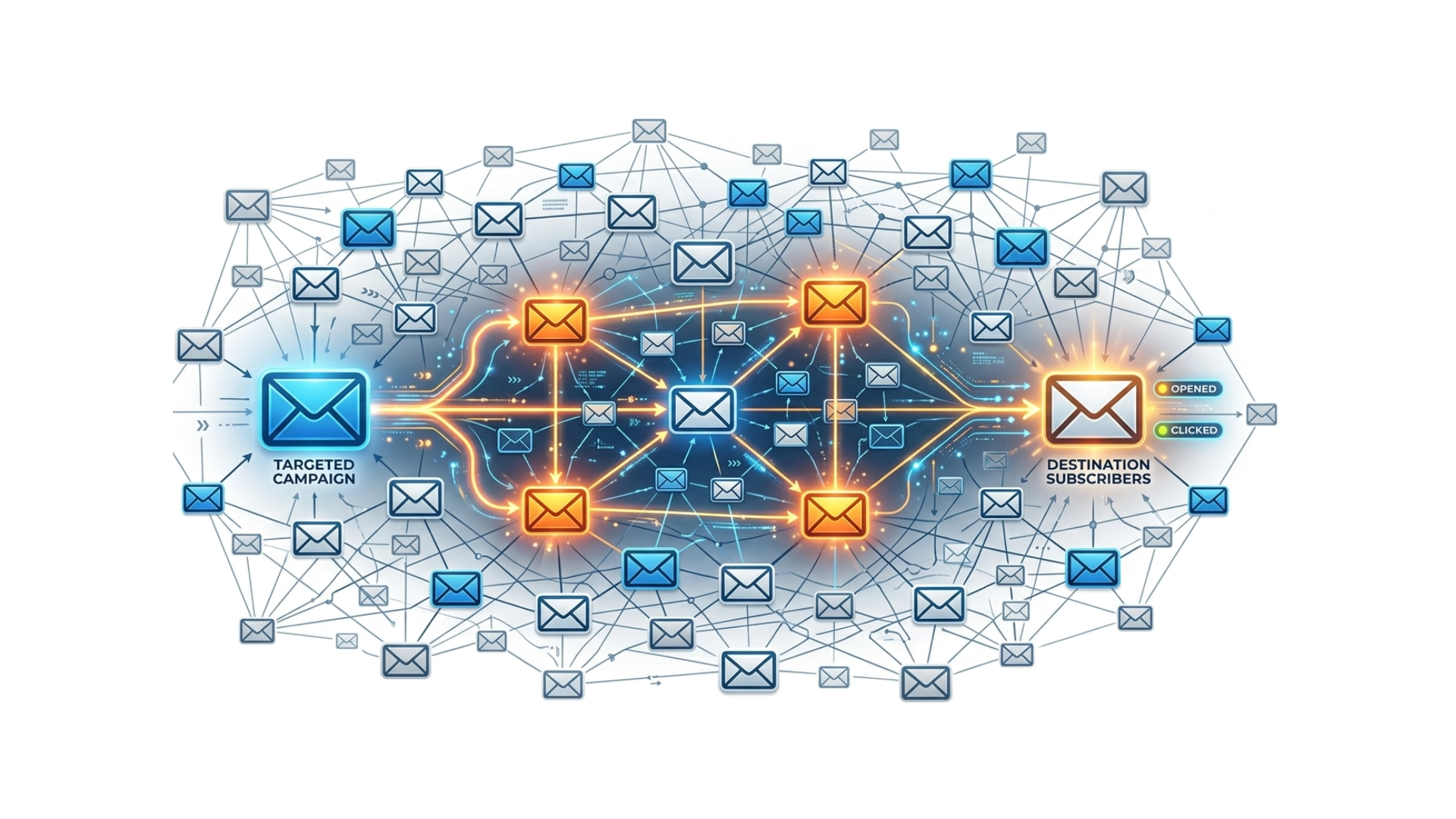
Targeted campaigns result in better open rates, click-through rates, and overall interaction with your audience.
Focusing on a specific audience ensures that marketing budgets are used efficiently, delivering better returns.
One of the most useful features of a CRM users email list is the ability to target users of specific platforms. Different CRM vendors attract different company profiles, so knowing which platform a prospect uses helps you tailor your messaging accordingly.

Salesforce dominates the CRM market with 20.7 percent market share, making a Salesforce CRM users email list particularly valuable for vendors selling integrations, apps, or consulting services within the Salesforce ecosystem.
Siebel remains Oracle’s primary on-premise CRM system, often used by large enterprises with complex requirements. A Siebel CRM users mailing list reaches organizations that may be considering modernization or additional functionality.
NetSuite users typically seek tight integration between CRM and ERP systems. Growing mid-market businesses often have expanding technology budgets and evolving requirements.
Zoho attracts SMBs and startups looking for affordable, flexible CRM solutions. Zoho users often respond well to cost-effective add-ons and services.
Microsoft Dynamics users are typically companies already invested in the Microsoft ecosystem—Office 365, Azure, and related tools.
Sage CRM appeals to small and mid-sized businesses, particularly in accounting-heavy industries like professional services and distribution.
Amdocs specializes in CRM for telecom and media industries, making this list valuable for vendors targeting those specific verticals.
Workbooks is a UK-based CRM popular with mid-market companies, particularly in professional services and manufacturing.
Pivotal remains in use at some enterprise organizations, often representing opportunities for migration or modernization services.
OnContact serves SMBs with straightforward contact management requirements—a good fit for vendors offering simple, affordable solutions.
GoldMine users tend to be small businesses and independent professionals using desktop-based CRM, often open to cloud migration options.
For vendors targeting HR technology buyers alongside CRM users, HRMS (Human Resource Management System) users lists are also available to expand reach into related technology categories.
Rich data fields enable precise targeting and personalization. The more attributes available, the better you can segment outreach and craft relevant messaging.
A typical CRM user email list includes:
Off-the-shelf lists work for some campaigns, but customization dramatically improves results—segmented campaigns deliver 760% more revenue than non-segmented ones. Most providers offer filtering options that let you build a CRM customers list matching your exact requirements.
You might target CIOs and IT Directors for enterprise software sales, or Sales Managers and Marketing VPs for productivity tools. Role-based targeting ensures your message reaches people with relevant authority and interest.
An enterprise software vendor probably wants companies with 500+ employees, while a startup-focused tool might target SMBs with under 50 employees. Revenue-based filtering helps align prospects with your pricing model.
Vertical-specific messaging performs better than generic outreach. Filtering by healthcare, finance, manufacturing, or other industries using standard classification codes lets you speak directly to industry-specific pain points.
Whether you’re targeting the USA, UK, Canada, Australia, or specific states and cities, geographic filtering supports localized campaigns and territory-based sales approaches.
A CRM users email list supports multi-channel outreach—not just email campaigns. Here’s how teams typically put these lists to work.
Targeted email outreach to CRM users with personalized messaging based on their current platform works well because you can highlight integration capabilities, migration benefits, or complementary features—businesses using CRM see 300% higher conversion rates.
Direct phone numbers in the list support sales development and appointment setting. Calling someone who already uses CRM technology means you’re not explaining basic concepts—you can jump straight to value.
Physical addresses enable direct mail campaigns for event invitations, product announcements, or high-touch account-based marketing.
LinkedIn profiles and social handles support social selling approaches. Connecting with prospects on multiple channels increases touchpoints and builds familiarity over time.
Why purchase a pre-built CRM users database rather than building one from scratch? Several advantages stand out:
Faster time-to-market: Skip months of manual prospecting and list building
Higher conversion rates: Reach organizations already familiar with CRM technology
Precision targeting: Focus outreach on decision-makers at companies using specific CRM platforms
Multi-channel ready: Data supports email, phone, direct mail, and social campaigns
Improved ROI: Reduce wasted spend on unqualified or outdated contacts
Global reach: Access CRM users across USA, UK, Canada, Australia, and other regions
Data quality determines campaign success. Outdated or inaccurate contacts lead to bounced emails, wasted calls, and damaged sender reputation.
CampaignLake’s verification process includes:
Opt-in sourcing: Contacts are collected through permission-based methods
AI-powered validation: Automated systems check email syntax and domain validity
Human verification: Manual review ensures data accuracy and relevance
Regular updates: Database is refreshed frequently to remove outdated records
Compliance checks: All data adheres to GDPR, CAN-SPAM, CCPA, and CASL regulations
Deliverability testing: Email addresses are tested to ensure high inbox placement rates
This multi-step approach delivers high data accuracy and strong deliverability rates—meaning campaigns reach real people at real companies.
Choosing the right data partner makes a measurable difference in campaign performance. CampaignLake provides a highly accurate CRM users email database built for B2B marketing teams who value precision and compliance.
Verified and opt-in data: Every contact is permission-based and validated through a 7-tier verification process
Deep customization: Build lists by CRM vendor, job title, industry, geography, and more
Global coverage: Access CRM users across major markets worldwide
CRM-ready formats: Data delivered in Excel or CSV for easy integration with existing tools
Free sample available: Evaluate data quality before purchase
Dedicated support: Expert team to help refine targeting requirements
Replacement guarantee: Invalid contacts replaced at no additional cost
Reputable providers typically achieve high deliverability rates due to regular verification and opt-in sourcing practices. CampaignLake maintains strong accuracy through multi-step validation.
Quality providers refresh their databases every 30-45 days to remove outdated contacts, update job titles, and add new records.
Yes. Lists are delivered in standard formats (CSV, Excel) that integrate with popular CRM and marketing automation tools like Salesforce, HubSpot, Marketo, and Mailchimp.
CampaignLake provides global coverage including USA, UK, Canada, Australia, Europe, and APAC regions. Lists can be filtered by specific countries, states, or cities.
Compliant providers source data through opt-in methods and adhere to major privacy regulations including GDPR, CAN-SPAM, CCPA, and CASL.
Both terms are often used interchangeably to describe databases of contacts at companies using CRM software.
Delivery time depends on customization requirements. Standard lists are typically delivered within 24-48 hours, while highly customized lists may take 3-5 business days.
Absolutely. Lists can be filtered to include only users of specific platforms like Salesforce, Zoho, MS Dynamics, or any other CRM vendor in the database.
Common titles include CIOs, CTOs, IT Directors, IT Managers, Sales Directors, Sales Managers, Marketing VPs, and other decision-makers involved in CRM adoption and technology purchasing.
Yes. CampaignLake offers a replacement guarantee for contacts that bounce or prove invalid, ensuring you receive full value from your purchase.

Ben Williams is a leading voice in B2B email marketing and data-driven lead generation. Known for his strategic mindset and deep understanding of high-performance email lists, Ben helps businesses cut through the noise and connect with their ideal audience. With a background rooted in growth marketing and sales enablement, he transforms raw data into revenue-generating campaigns that consistently deliver results. His work empowers organizations to streamline prospecting, boost conversions, and maximize ROI. Beyond the inbox, Ben stays at the forefront of emerging trends in data intelligence and B2B engagement, always seeking innovative ways to elevate campaign performance.