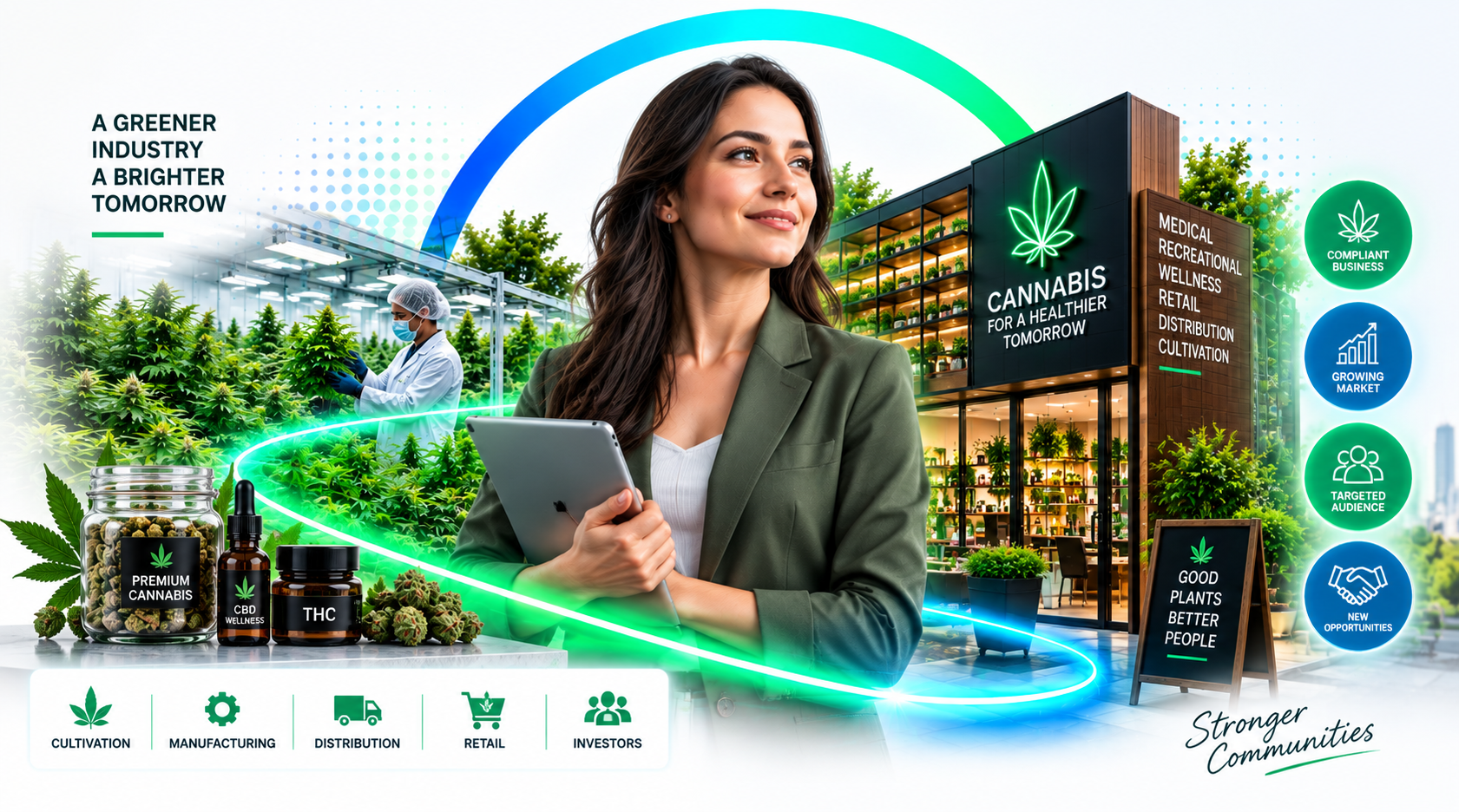
Marijuana industry email lists help B2B companies identify cannabis businesses and connect with professionals responsible for purchasing, operations, compliance, technology, and growth. A targeted cannabis business contact database may include dispensaries, cultivators, manufacturers, testing laboratories, distributors, and ancillary service providers.
The value of a cannabis email list is not simply the number of records it contains. Relevant business classifications, professional contact details, geographic filters, and transparent verification practices help sales and marketing teams build more focused prospecting campaigns.
In this guide, you’ll learn what marijuana industry email lists contain, which cannabis businesses and decision-makers you can target, how to evaluate contact-data quality, and how to build a more relevant B2B outreach strategy.
What Are Marijuana Industry Email Lists?
Marijuana industry email lists are B2B contact databases containing professional information about cannabis businesses and the people involved in their operations and purchasing decisions. Depending on the provider and available records, these databases may include dispensaries, cultivators, manufacturers, processors, testing laboratories, distributors, cannabis brands, and ancillary service providers.
A cannabis business contact database can contain company details, business type, location, professional email addresses, job titles, and other relevant fields. These details help B2B marketers identify accounts that match their ideal customer profile and develop more focused outreach campaigns.
Cannabis businesses have different operating models, purchasing needs, and regulatory requirements. For that reason, separating business types and geographic markets can be more useful than treating every cannabis-related company as one audience.
Which Cannabis Businesses Can You Target With a B2B Email List?
B2B marketers segmenting the cannabis industry generally work with a mix of plant-touching operators and the ancillary companies that serve them. Plant-touching businesses hold a state cannabis license and physically handle the product, including:
- Cannabis dispensaries and retailers
- Cultivators, growers, and cannabis farms
- Cannabis manufacturers and processors
- Extraction companies
- Cannabis product brands
- Wholesalers and distributors
- Testing laboratories
Ancillary businesses support the industry without touching the plant, and this is where most vendor outreach data becomes useful:
- Cannabis technology and software companies
- Cannabis packaging companies
- Cannabis equipment suppliers
- Compliance and licensing software providers
- Other ancillary service providers, such as insurance, logistics, and security
Keeping these two groups separate in your segmentation matters. A compliance software company usually needs to reach license holders directly, while a packaging supplier may also want ancillary manufacturers and brands that are not license holders themselves.
Which Cannabis Decision-Makers Can You Reach?
Generic company inboxes rarely convert in B2B cannabis outreach, since most licensed operators route unsolicited email away from a public info@ address. Contact-level data lets you reach the specific role responsible for a purchase decision, such as:
- Owners, founders, and co-founders
- CEOs and presidents
- Managing partners and general managers
- Operations directors
- Purchasing and procurement managers
- Supply chain leads
- Marketing directors and sales directors
- Compliance leaders
- Cultivation and production managers
- Retail managers
A cultivation equipment vendor and a compliance software vendor are rarely selling to the same title. Matching your offer to the role that owns that budget line, rather than mailing every contact at a company, is what separates targeted B2B prospecting from a mass blast.
What Information Does a Cannabis Business Contact Database Include?
A cannabis business contact database may combine company-level information with professional contact details. The available fields depend on the provider, the market, and the specific records collected.
| Data field | What it identifies | B2B marketing use |
|---|---|---|
| Company name | Cannabis business or organization | Account targeting |
| Business type | Dispensary, cultivator, manufacturer, or ancillary provider | Audience segmentation |
| Contact name | Individual professional | Personalization |
| Job title | Contact’s stated role | Decision-maker targeting |
| Seniority | Professional level, where available | Role prioritization |
| Business email | Professional email address | Business outreach |
| Website | Company web presence | Account research |
| Location | City, state, ZIP code, or territory | Geographic targeting |
| License category | Relevant license classification, where available | Business segmentation |
| Company size | Available company-size indicator | ICP filtering |
| Ownership structure | Independent, group, or multi-location, where verifiable | Account segmentation |
Data availability note: Not every record necessarily contains every field. Before requesting a list, confirm which fields are available for your selected business types, locations, and contact roles.
How to Evaluate Cannabis Business Contact Data
Finding useful cannabis business contacts requires more than downloading a large database. A structured evaluation process helps marketers determine whether records are relevant, current, and suitable for their campaign.
1. Define Your Ideal Customer Profile
Identify the cannabis business types, geographic markets, company sizes, and purchasing roles that match your product or service.
2. Confirm Business Relevance
Check whether the records represent the types of cannabis businesses you intend to target. Separate plant-touching operators from ancillary service providers when the distinction matters to your campaign.
3. Identify Relevant Decision-Makers
Select job functions and titles that correspond to the purchasing responsibility your offer addresses. A cultivation equipment vendor and a compliance software provider may need different audiences.
4. Review Business Status Information
Where available, evaluate the business’s operating status and relevant license information. Treat licensing data as a field that may change and requires ongoing review.
5. Evaluate Professional Contact Data
Check whether the email address, contact name, job title, and company association are current and relevant. Technical email validation does not, by itself, confirm that a person is still in a role or that the person wants to receive marketing messages.
6. Check Data Freshness
Ask when records were last reviewed and which fields were updated. A transparent freshness policy is more useful than an unsupported claim that every record is accurate.
7. Segment Before Outreach
Build smaller audiences by business type, location, role, seniority, and company characteristics rather than sending the same message to every contact.
8. Measure Campaign Outcomes
Track deliverability, replies, meetings, and qualified opportunities by segment. Use the results to refine your targeting and messaging.
Cannabis B2B Outreach Best Practices
Effective cannabis B2B outreach starts with relevant targeting, clear messaging, and responsible contact-data practices.
Segment by business type: Tailor your message to dispensaries, cultivators, manufacturers, testing laboratories, or ancillary providers.
Target relevant roles: Match your offer to the person responsible for purchasing, operations, compliance, technology, or another relevant function.
Personalize by business need: Explain how your product or service relates to the recipient’s actual responsibilities.
Use geographic targeting: Organize audiences by state, region, or sales territory when location affects your offer.
Review data before sending: Check contact information and available business-status fields before launching a campaign.
Respect opt-outs and suppression lists: Maintain a process for honoring unsubscribe requests and suppressing contacts who should not receive further messages.
Measure by segment: Compare replies, meetings, and qualified opportunities across different audiences.
Review applicable marketing requirements: Follow relevant email marketing and privacy obligations for your sender, recipients, and campaign.
Email Marketing and Privacy Considerations
B2B email outreach still requires attention to applicable email marketing and privacy requirements. Before sending commercial messages, review the rules relevant to your business, the sender’s location, the recipient’s location, and the type of information being used.
Campaigns should use accurate sender information, honest subject lines, appropriate opt-out mechanisms, and a process for honoring suppression requests. Privacy obligations may vary by jurisdiction and by the type of contact information collected or used.
Cannabis businesses may also operate under industry-specific rules that differ across markets. A campaign involving consumer cannabis advertising, regulated products, or licensed operators should be reviewed against the applicable requirements before launch. This article is not legal advice.
Common Marijuana Industry List-Building Mistakes
- Using outdated cannabis business records instead of refreshed data
- Treating all cannabis companies as one homogeneous audience
- Mixing licensed businesses with unverified or unlicensed operators
- Targeting generic company inboxes instead of named contacts
- Failing to identify the actual decision-maker before sending
- Ignoring state-by-state differences in market maturity and regulation
- Under-segmenting a list before a campaign goes out
- Sending offers that do not match the recipient’s business type
- Relying on stale employee or title information
- Over-emailing the same contacts without spacing out sends
- Ignoring suppression requests and opt-outs
- Disregarding applicable marketing and privacy requirements
- Relying on unsupported market size or accuracy statistics in outreach copy
How to Segment Cannabis Contacts for B2B Marketing
Cannabis B2B audiences can be segmented using several related variables. Combining these filters helps marketers build a more relevant audience for their specific offer.
| Segmentation variable | Example |
|---|---|
| Business type | Dispensary, cultivator, manufacturer, ancillary provider |
| Geography | State, city, ZIP code, or sales territory |
| Decision-maker | Owner, procurement manager, operations director, compliance leader |
| Company size | Independent operator, regional company, multi-location group |
| Business function | Purchasing, operations, production, marketing, finance, technology |
| Ownership structure | Independent, group, or vertically integrated business, where verifiable |
Choose filters based on the actual audience your product or service serves. A narrow, relevant segment is more useful for campaign planning than an undifferentiated list.
Who Uses Cannabis Business Email Lists?
Cannabis business email lists are primarily used by companies that sell products or services to cannabis operators and ancillary businesses. Common users include:
Cannabis technology and software providers
Point-of-sale and compliance technology companies
Packaging and equipment suppliers
Cultivation technology vendors
Commercial insurance and professional services firms
Logistics, security, and facility-management providers
Marketing agencies and recruiting companies
Laboratory equipment and business intelligence providers
Commercial real estate and other B2B service providers
The relevant audience depends on the product being sold, the market served, and the purchasing roles involved.
How CampaignLake Supports Cannabis B2B Prospecting
CampaignLake provides B2B contact data that marketers can use to build targeted audiences around cannabis businesses and professional decision-makers. Depending on the available data and selected filters, marketers may be able to organize an audience by business type, location, job function, seniority, and other relevant company characteristics.
For example, a packaging supplier may need contacts at cannabis manufacturers and product brands, while a compliance software provider may focus on operations or compliance professionals at relevant businesses. Separating these audiences helps marketers align their messaging with the needs of each segment.
Before requesting a list, define your target business types, geographic market, decision-maker roles, and required data fields. CampaignLake can then help you evaluate the available audience and determine which filters are appropriate for your campaign.
Want to explore a cannabis business contact audience? Share your target business type, geographic market, and decision-maker roles to discuss the available data and next steps.
Key Takeaways
Marijuana industry email lists support B2B prospecting into cannabis businesses and ancillary providers.
Business type, location, and decision-maker role help define a relevant audience.
Data quality should be evaluated using business relevance, contact information, freshness, and available verification details.
Different cannabis businesses require different outreach messages and purchasing contacts.
Campaigns should follow applicable email marketing and privacy requirements.
A focused audience and clear campaign measurement are more useful than relying on list size alone.
Cannabis B2B List Checklist
- Confirm the target cannabis business category, plant-touching or ancillary.
- Define the job titles and decision-making roles you need to reach.
- Verify company and professional contact information before sending.
- Segment contacts by business type, geography, and role before starting outreach.
- Review CAN-SPAM and applicable state privacy requirements for your campaign.
Frequently Asked Questions
They are B2B contact databases built for companies selling to licensed cannabis businesses. They typically include company details, such as business type and location, along with professional contact information for owners, managers, and other decision-makers at those companies.
Coverage can include dispensaries, cultivators, manufacturers, processors, extraction companies, testing laboratories, distributors, cannabis brands, and ancillary businesses such as packaging, equipment, technology, and compliance vendors that serve the industry without touching the plant.
Yes. Dispensary owners and other retail decision-makers, such as general managers and retail managers, can typically be filtered from a broader cannabis database using business type and job title fields, rather than mailing an entire company’s contacts.
Yes, and it is one of the more useful ways to segment this industry. Cannabis legalization status, license categories, and market maturity vary significantly by state, so geographic segmentation helps align messaging with what is actually relevant in that market.
Common roles include owners, founders, CEOs, general managers, operations directors, purchasing and procurement managers, marketing and sales directors, compliance leaders, and cultivation or production managers, depending on the business type.
Verification typically checks whether an email is deliverable, matches the stated company domain, and is still associated with the named contact and title. It is worth doing this before a send, not just after a bounce spike appears in your reports.
Yes. Business type is usually a standard filter field, which lets you isolate cultivators, dispensaries, manufacturers, testing laboratories, and ancillary vendors into separate segments instead of running one campaign across all of them.
There is no single fixed interval, but this industry sees frequent changes in ownership, staffing, and license status, so contact data that has not been refreshed recently is more likely to bounce or reach someone who has left the role.
Confirm the contact and business data are current, identify the correct decision-maker for your offer, and make sure your email meets CAN-SPAM requirements, including accurate sender information and a working opt-out link.
CampaignLake provides segmented B2B contact data that can be filtered by cannabis business type, decision-maker role, seniority, and location, so marketers can build a targeted list instead of working from one undifferentiated file.
Conclusion
A targeted marijuana industry email list can help B2B companies identify relevant cannabis businesses and the professionals involved in purchasing and operations. The most useful approach combines business-type segmentation, geographic targeting, relevant decision-maker roles, and transparent contact-data evaluation.
Before starting a campaign, confirm that the available records match your ideal customer profile, review the required data fields, and prepare messaging for the specific audience you want to reach.
If you are exploring cannabis business contact data for your next B2B campaign, define your target businesses, locations, and professional roles, then contact CampaignLake to discuss the available audience and next steps.