Canada B2B data providers vary widely in accuracy, compliance handling, and market coverage, and the right choice depends on matching a provider’s verification process, data fields, and segmentation options to your outreach goals. This guide covers seven factors that separate a dependable Canadian B2B data provider from one that damages your sender reputation and stalls your pipeline.
What Is a B2B Data Provider for the Canadian Market?
A Canada B2B data provider is a company that builds and maintains business contact records, such as verified email addresses, job titles, and firmographic details, scoped to organizations and decision makers located in Canada.
Unlike a general-purpose contact list, this type of provider structures records around fields that support outreach: company name, industry classification, employee count, province or territory, and a documented verification date. The provider’s role is to keep those fields current and filterable, not just to hand over a spreadsheet of addresses.
Providers in this space typically source records through a mix of public business registries, opt-in web forms, professional directories, and direct data partnerships, then run each record through an email verification step before it ships.
Why Do B2B Data Providers Matter for Canadian Outreach?
A Canada B2B data provider gives marketing and sales teams a way to reach a defined set of Canadian businesses without guessing which contacts are still active or which region they sit in. That matters more in Canada than in most markets because Canada’s Anti-Spam Legislation, known as CASL, sets stricter consent rules for commercial electronic messages than the CAN-SPAM Act does in the United States.
The provider you choose affects several teams differently:
- B2B sales teams and demand generation marketers use Canadian data to build province-specific outbound sequences instead of running one generic North American list.
- SaaS companies and data-driven firms rely on technographic fields to find Canadian accounts already running compatible tools before they pitch an integration or migration.
- Agencies serving Canadian clients need documented consent and sourcing records to defend a campaign if a recipient files a complaint with the Canadian Radio-television and Telecommunications Commission.
- Recruiters and training providers use firmographic filters to target hiring managers or learning and development leads at companies of a specific size or industry.
Across all of these use cases, the value comes from matching the data to a specific, compliant use, not from the raw size of the list.
Ready to Reach More Decision-Makers?
Access the largest verified decision-maker email database in the U.S. Filter, download and launch targeted outreach in minutes – no scraping, no guesswork, no bounces.
What Data Fields and Segmentation Options Should a Canada B2B Data Provider Offer?
A usable Canada B2B data provider pairs a verified email address with firmographic and behavioral context, so marketers can filter, personalize, and suppress records instead of sending one message to an undifferentiated list. The fields below are the ones that most directly affect targeting and deliverability.
| Data Field | Segmentation Use | Marketing Application |
|---|---|---|
| Verified business email address | Confirms the record is reachable | The deliverable itself; every other field supports this one |
| Job title and seniority | Filters by decision-making authority | Matches messaging to buyers, influencers, or end users |
| Company name and NAICS industry code | Filters by industry vertical | Targets offers relevant to that sector’s regulations and workflows |
| Employee count and revenue band | Filters by company size | Separates enterprise messaging from small and mid-sized business offers |
| Province or territory | Filters by region | Supports timezone-aware sending and province-specific compliance handling |
| Technology stack (technographic data) | Filters by tools already in use | Targets integration, migration, or add-on offers to a compatible tech base |
| Last-verified date | Filters out stale records | Sets confidence level before a send and flags records due for re-verification |
How Do You Evaluate a Canada B2B Data Provider in 7 Steps?
Evaluating a provider before you buy prevents the most common problem with Canadian B2B data: a list that looks large but performs poorly once you start sending. The seven steps below cover the full evaluation.
1. Check the Verification Method and Refresh Cycle
Ask exactly how each email address is verified, whether that is SMTP-level checking, double opt-in confirmation, or a combination, and how often the provider re-verifies records. A provider who cannot describe this process in specific terms is a risk to your sending domain.
2. Confirm Canadian Market Coverage by Province
General “North America” lists often skew heavily toward the United States. Ask for a coverage breakdown by province or territory so you know whether the provider actually has depth in the regions you are targeting, such as Ontario, Quebec, British Columbia, or Alberta.
3. Review the Data Fields Included in Each Record
Confirm which fields ship with every record by default and which require an upgrade or a custom build. A record with only a name and email address gives you far less to work with than one that includes industry, company size, and province.
4. Ask About Segmentation and Filtering Options
Find out whether you can filter and export by the fields that matter to your campaign, such as job title, NAICS code, or technology stack, before you commit to a purchase. Segmentation you cannot apply is segmentation you are not actually getting.
5. Verify CASL and PIPEDA Compliance Practices
Ask how the provider documents consent or the applicable CASL exemption for each record, and how it handles the business contact information exemption under Canada’s Personal Information Protection and Electronic Documents Act. A provider who treats this as someone else’s problem is passing legal risk on to you.
6. Request a Sample List Before You Buy
A sample record set lets you check field accuracy, formatting, and bounce rates independently before committing a full campaign budget. Run the sample through your own verification tool if you have one.
7. Match List Size and Fit to Your Outreach Goals
A smaller, well-matched list of Canadian contacts in the right industry and province consistently outperforms a larger, generic one on opens, replies, and conversions. Scope the purchase to the segment you can realistically serve, not to the biggest number a provider can quote.
What Are Best Practices for Using Canada B2B Data Providers?
The best-performing campaigns built on Canadian B2B data treat the list as a maintained asset rather than a one-time purchase. The practices below cover the areas that most affect deliverability and response.
- Segment before you send. Group by industry, company size, and province so each message matches a specific reader instead of a generic Canadian business persona.
- Document your consent basis. Record whether each contact falls under CASL’s express consent, implied consent, or a specific exemption, since you carry the burden of proof if a complaint is filed.
- Verify on a schedule, not once. Canadian business contacts change roles and companies regularly, so plan for periodic re-verification rather than a single check at purchase.
- Keep every send relevant to the segment. An offer built for enterprise IT buyers will not land the same way with small business owners; match the message to the segment.
- Protect deliverability. Authenticate your sending domain, monitor bounce and complaint rates, and remove unengaged addresses before they damage your sender reputation.
- Test before scaling. Run subject lines, send times, and offers against a smaller sample before committing a full segment to one version.
- Measure by segment, not just campaign. Aggregate open and click rates can hide which specific industries or provinces are actually responding.
What Common Mistakes Should You Avoid When Buying Canadian B2B Data?
Most underperforming campaigns built on Canadian B2B data trace back to a handful of avoidable issues rather than the channel itself. Watch for these before you launch.
- Poor targeting. Sending one message to an entire Canadian database instead of a defined industry or province segment produces low relevance and low response.
- Outdated records. Canadian business contacts change jobs and companies frequently, so an unverified list ages out faster than most sales teams expect.
- Irrelevant messaging. An offer built for enterprise buyers rarely lands with small business owners, and generic messaging reads as spam to both.
- Weak segmentation. Splitting a list by only one field, such as province, ignores the industry and company-size data that usually predicts engagement better.
- Over-emailing. Sending too frequently to the same segment increases unsubscribes and complaint rates, which damages deliverability for future campaigns.
- Ignoring applicable privacy and marketing requirements. Commercial email to Canadian recipients falls under CASL regardless of where your business is based, and PIPEDA rules apply once a record includes information beyond basic business contact details. Provinces such as Quebec, Alberta, and British Columbia also have their own private-sector privacy laws that can add requirements on top of federal rules.
Where Does CampaignLake Fit In?
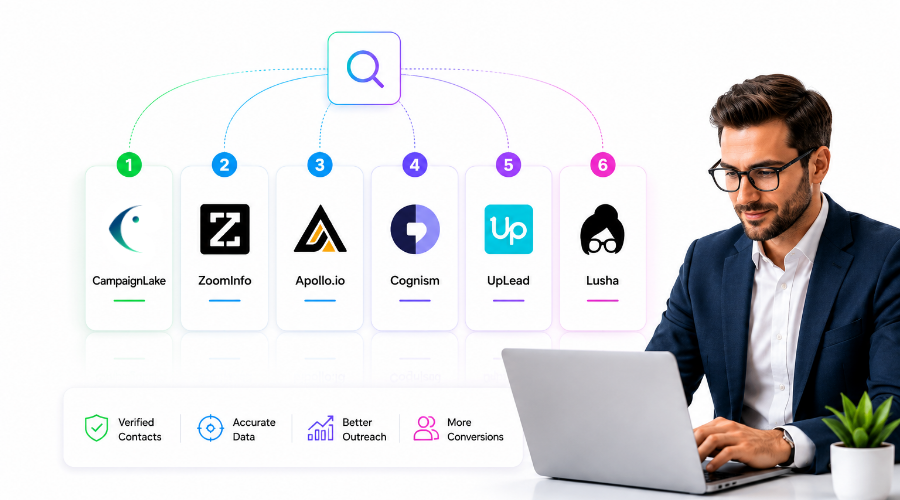
CampaignLake builds targeted B2B email lists, including data scoped to the Canadian market by industry, company size, and province. It is built for teams that need a defined Canadian audience rather than a generic North American list.
- Business records segmented by industry, employee count, revenue band, and province or territory.
- Data verification and refresh cycles designed to reduce bounces and keep records current.
- Custom list builds scoped to a defined Canadian audience rather than sold as one fixed bundle.
- Sample records available before purchase, so marketers can check fit and quality independently.
Use this as a starting point for research and comparison, and confirm verification methods and compliance practices directly with any provider, including CampaignLake, before committing a campaign budget.
TL;DR: Canada B2B Data Providers Key Takeaways
- A Canada B2B data provider maintains verified business contact records scoped specifically to organizations and decision makers in Canada.
- B2B sales teams, demand generation marketers, SaaS companies, agencies, and recruiters each use Canadian data for different, specific outreach goals.
- Useful data fields go beyond the email address to include job title, NAICS industry code, company size, and province or territory.
- Segmentation, not list size, is what drives response and conversion in Canadian B2B campaigns.
- Data quality depends on the verification method, refresh cycle, and how recently each record was confirmed.
- CASL and PIPEDA both apply to Canadian B2B outreach, and provincial privacy laws can add further requirements.
- Common mistakes include poor targeting, outdated records, weak segmentation, and ignoring applicable privacy and marketing requirements.
Canada B2B Data Provider Checklist
- Define the exact segment (industry, company size, province) your offer is built for before you request a quote.
- Ask any provider how records are verified and how recently the list was refreshed.
- Confirm the provider’s approach to CASL consent documentation and the PIPEDA business contact exemption.
- Request a sample record set and check field accuracy and bounce rate before buying the full list.
- Schedule periodic re-verification rather than treating the list as a one-time purchase.
Conclusion
Choosing among Canada B2B data providers comes down to matching verification quality, data fields, and provincial coverage to the specific segment your offer is built for. Confirm how a provider verifies and refreshes its records, ask directly about CASL and PIPEDA compliance practices, and request a sample before committing a budget. Marketers who evaluate providers this way consistently see better response from Canadian outreach than those who buy on list size alone.
Frequently Asked Questions
What is a Canada B2B data provider?
A Canada B2B data provider is a company that compiles and maintains verified business contact records, such as email addresses, job titles, and firmographic details, scoped to organizations and decision makers located in Canada rather than a general North American audience.
Who typically uses a Canada B2B data provider?
B2B sales teams, demand generation marketers, SaaS companies, agencies serving Canadian clients, recruiters, and training providers use Canada B2B data providers. Each group filters the data differently, such as by industry or company size, rather than treating all Canadian businesses as one audience.
Does CASL apply to B2B email sent to Canadian contacts?
Yes. Canada’s Anti-Spam Legislation applies to commercial electronic messages sent to or from a Canadian address, including B2B messages. Certain business-to-business exemptions exist, but they generally still require a relevant message and an existing business relationship or a conspicuously published contact.
Does PIPEDA restrict buying Canadian business contact data?
PIPEDA generally excludes business contact information, such as a name, title, business address, or business phone number, when it is used solely to communicate with someone about their employment or profession. If a provider adds other personal information to a record, PIPEDA’s broader consent rules can apply.
What data fields should a good Canada B2B data provider include?
Beyond a verified email address, look for job title, company name, NAICS industry code, employee count or revenue band, province or territory, and a last-verified date. These fields let you segment the list instead of sending one message to every record.
How do you segment a Canadian B2B list effectively?
Start with industry and company size, then layer in province or territory and technology stack where it is available. Effective segments each need a distinct offer or message; if two segments would receive an identical email, combine them or refine your criteria.
How often should a Canadian B2B contact database be re-verified?
Canadian business contacts change roles and employers on a regular basis, so plan for re-verification on a recurring schedule rather than a single check at the time of purchase. Ask any provider what their refresh cycle is and how failed records are handled.
Do provincial privacy laws affect B2B data providers in Canada?
Alberta, British Columbia, and Quebec each have private-sector privacy laws considered substantially similar to PIPEDA, and they generally apply within that province. Quebec’s Law 25 adds further obligations, so marketers targeting Quebec-based contacts should confirm a provider’s practices for that province specifically.
How can marketers reduce bounce rates when using Canadian B2B data?
Start with a provider that documents its verification method and provides a recent last-verified date, then monitor bounce and complaint rates after every send and remove addresses that repeatedly fail. Sending only to segments that match your offer also reduces the disengagement that raises bounce rates over time.