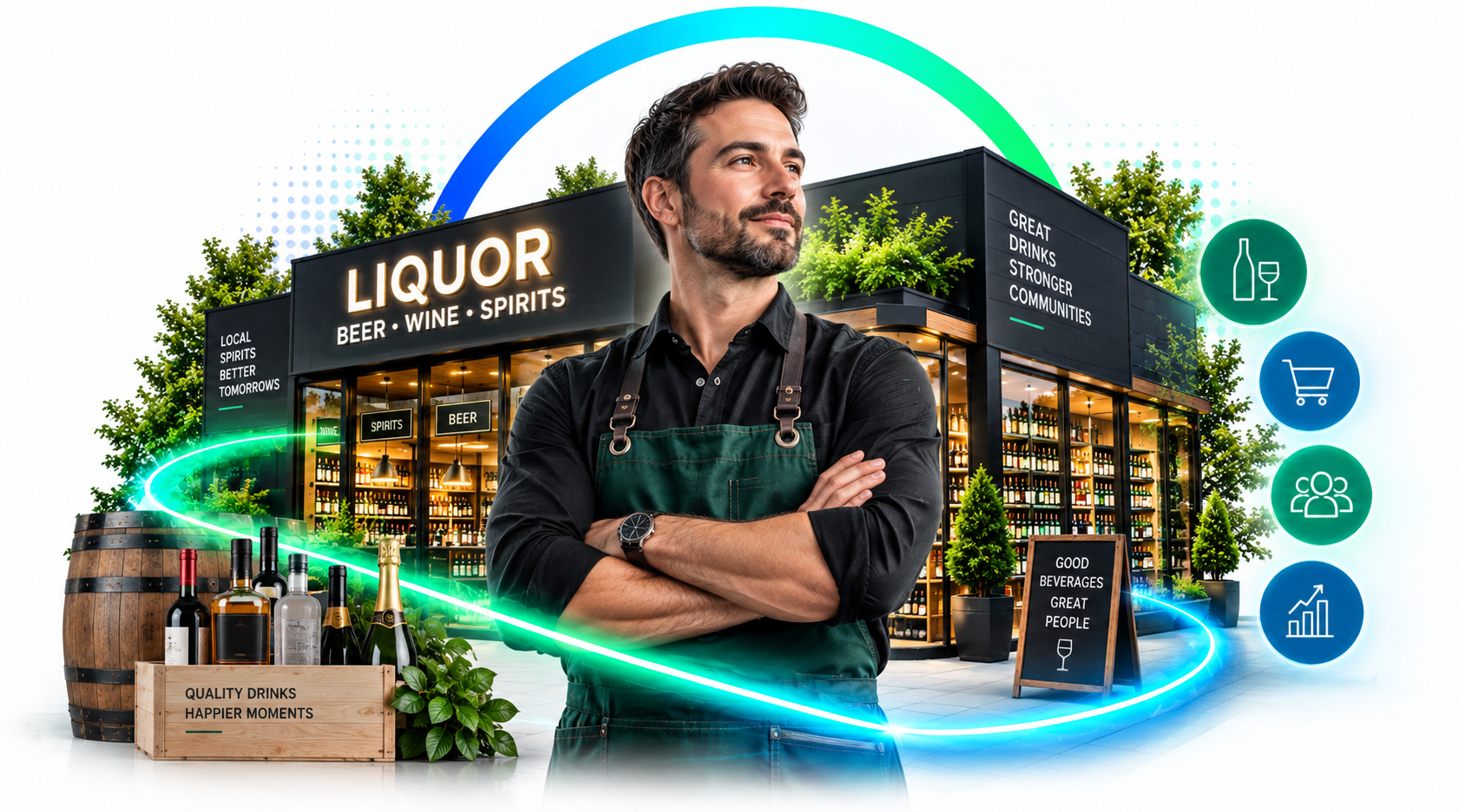
Reaching liquor store owners can be challenging when your sales team relies on general business directories, shared inboxes, or outdated contact information. A Liquor Store Owners Email List helps B2B marketers research and identify liquor retailers, business owners, and purchasing decision-makers for targeted outreach.
For beverage distributors, wholesalers, retail technology providers, payment solution companies, and other businesses serving liquor retailers, the right contact data can support more focused prospecting and account-based marketing.
This guide explains how to find liquor store owners, what information a useful contact database should include, how to verify business contact details, and how to plan relevant outreach. You’ll also learn how CampaignLake’s liquor store business contact data may fit into your prospecting workflow.
What Is a Liquor Store Owners Email List?
A Liquor Store Owners Email List is a database of verified contact records for the people who own, operate, or control purchasing at liquor stores, including business email addresses, phone numbers, and store details.
This is different from a general liquor-industry contact list. A Liquor Store Owners Database is built around decision-makers rather than general store staff, so records center on the owner’s name, job title, business name, and location instead of a store’s public-facing contact form. That distinction matters because outreach sent to a generic “info@” address or a cashier’s inbox rarely reaches the person who signs off on a new vendor, a new POS system, or a new insurance policy.
Marketers who use a Liquor Store Owner Contact List typically fall into a few categories: alcohol beverage brands and distributors looking for new retail placements, wholesalers and beverage suppliers expanding distribution, POS and retail technology providers, payment solution companies, insurance providers, and other commercial service providers such as security, logistics, and merchandising vendors that sell into independent and multi-location retail.
Why Liquor Store Owner Data Matters for B2B Outreach
Liquor retail is a fragmented, state-regulated channel made up mostly of independent and small-chain operators, which means there is no single directory a marketer can pull from. Verified owner-level data closes that gap by identifying who runs each location and how to reach them directly.
Several types of B2B vendors rely on this kind of data to reach liquor retailers:
- Beverage distributors, wholesalers, and spirits suppliers use owner contact data to identify new retail accounts and expand shelf placement in specific states or regions.
- Wineries and breweries, where state and local licensing rules permit direct retailer outreach, use it to build relationships with independent bottle shops and specialty retailers (see our guide for wineries and beverage manufacturers).
- POS and retail technology providers target store owners who are evaluating checkout, inventory, or age-verification systems.
- Payment solution companies reach owners directly rather than routing through call centers or general store lines.
- Insurance providers serving liquor liability, property, and general commercial lines need the actual policyholder decision-maker, not a store clerk.
- Logistics, packaging, merchandising, and security vendors use owner and purchasing-manager contacts to pitch delivery, display, and loss-prevention services.
In each case, the value of the data comes from reaching the specific person with purchasing authority, which shortens sales cycles and reduces wasted outreach to the wrong department.
What’s Inside a Liquor Store Owner Database?
A usable Liquor Store Owners Database goes beyond a name and an email address. The table below outlines the fields that matter most for segmentation and how each one supports a marketing or sales use case.
| Field | What It Captures | Practical Marketing Use |
|---|---|---|
| Owner or Decision-Maker Name | Individual with purchasing authority | Personalized, direct outreach instead of generic store contact |
| Job Title | Owner, proprietor, operator, purchasing manager, or store manager | Role-based messaging and offer relevance |
| Business Name | Legal or trade name of the store | Account-level tracking for multi-location operators |
| Verified Business Email | Work email tied to the store or ownership group | Direct email outreach and campaign delivery |
| Phone Number | Business line for the store or owner | Multichannel follow-up and call-based sales |
| Store Location, State, and ZIP Code | Physical address and geographic identifiers | Territory planning and state-specific compliance targeting |
| Company Size | Single-location or multi-location operation | Segmenting independent retailers from regional chains |
| Store Type | Liquor store, wine and spirits shop, specialty beverage retailer, grocery with liquor license | Product and offer relevance by store format |
| Ownership Structure | Independent owner-operator, franchise, or chain | Tailoring pitch complexity and decision-cycle expectations |
| Product Category Focus | Spirits-heavy, wine-focused, or general beverage mix | Matching supplier or brand outreach to store assortment |
| Geographic Coverage | Single market versus multi-state footprint | Prioritizing high-volume regions for campaign rollout |
How to Find and Reach Verified Liquor Store Owners
Businesses can use several research methods to identify liquor retailers and relevant business contacts. The best approach depends on the target market, the type of retailer, and the information required for the campaign.
1. Define Your Ideal Liquor Retailer Profile
Start by describing the businesses you want to reach. Consider:
- Independent stores or multi-location chains
- Specialty wine and spirits retailers or general liquor stores
- Specific states, cities, regions, or ZIP codes
- Retailers that fit your product or service offering
- Owners, operators, purchasing managers, or corporate buyers
A clear ideal customer profile helps you avoid collecting broad contact data that does not fit your sales strategy.
2. Research Relevant Business Accounts
Use legitimate business research sources to identify liquor retailers. Depending on your market, these may include:
- Business websites and publicly available company information
- Business directories
- Relevant trade associations
- Publicly available licensing or regulatory resources
- Reputable B2B data providers
Use these sources to research business identities and relevant contacts. Do not assume that a public listing confirms current ownership or purchasing authority.
3. Identify the Relevant Decision-Maker
The right contact depends on the business structure. An independent store may involve an owner-operator in purchasing decisions, while a multi-location company may use a buyer, category manager, or corporate procurement team.
Record the person’s actual role where it can be verified. If the role is uncertain, label it accordingly rather than presenting the person as a confirmed owner.
4. Organize Your Prospecting Data
Keep account-level information separate from individual contact information. This is especially important when one company operates several stores or has multiple relevant contacts.
Useful account fields may include business name, website, location, number of locations, and store type. Contact fields may include name, role, professional email, and verification status.
5. Evaluate Data Before Outreach
Check whether the records are relevant, sufficiently current, and appropriate for your intended use. A large database is not necessarily useful if it contains the wrong businesses, outdated contact information, or contacts outside your target market.
How to Verify Liquor Store Owner Contact Data
Contact verification helps marketers assess whether a prospect record is usable for a particular campaign. Email validation, business-status checks, and role confirmation are separate activities and should not be treated as the same process.
Email address verification
Check whether a business email address is valid and suitable for delivery. An email verification result does not necessarily prove that the person is the current owner or purchasing decision-maker.
Business-status verification
Check whether the retailer is still operating and whether the business name, location, and website are consistent with available information.
Role verification
Confirm whether the contact is an owner, operator, purchasing manager, or another relevant business role. Do not assume that a store manager is the owner or that a public contact is responsible for purchasing.
Data-freshness checks
Review the date of the last update, where available. Re-check records before major campaigns, especially when ownership, business status, or contact information may have changed.
Before launching a campaign
Remove invalid or undeliverable email addresses.
Confirm that the contact matches the intended audience.
Review business information for accuracy.
Keep previous opt-outs and suppression records up to date.
Re-check data according to your provider’s documented update process.
How to Segment Liquor Store Owner Contacts
Segmentation helps businesses organize prospects into groups that share relevant business characteristics. For liquor retailer outreach, useful segmentation attributes may include geography, store type, ownership structure, and contact role.
| Segmentation attribute | Example segments | Why it matters |
|---|---|---|
| Geography | State, city, region, or ZIP code | Aligns outreach with sales territories and service coverage. |
| Store type | Independent liquor store, specialty wine shop, multi-location retailer | Helps tailor the offer to the business model. |
| Ownership structure | Independent owner-operator or chain, where available | Helps identify the relevant purchasing process. |
| Contact role | Owner, operator, buyer, purchasing manager | Supports role-specific messaging. |
| Product focus | Wine-focused, spirits-focused, or general beverage retailer, where available | Helps match the offer to the retailer’s business profile. |
Example
A beverage distributor entering a new market could begin by researching liquor retailers in its target state, then organize accounts by store type and relevant purchasing contact. A retail technology provider may use a different approach, prioritizing businesses that fit its solution and identifying the appropriate operational or purchasing contact.
Use only segmentation attributes that are actually available and documented in your selected dataset.
B2B Outreach Compliance Considerations
Before contacting liquor store owners, businesses should review the marketing and privacy requirements that apply to their campaign, sender, and recipients.
For commercial email campaigns, consider the following:
Use accurate sender information and truthful subject lines.
Include the required business identification and contact information.
Provide an appropriate opt-out mechanism and honor valid opt-out requests.
Maintain suppression records so contacts who have opted out are not reintroduced into future campaigns.
Review the rules that apply to the jurisdictions where recipients are located.
Confirm that the data was collected and supplied for a permitted use under applicable laws and contractual terms.
Sources to consult
Review the official CAN-SPAM guidance from the U.S. Federal Trade Commission and applicable state privacy laws before publishing specific legal claims.
Important: Business email addresses are not automatically exempt from all privacy or marketing requirements. Legal obligations depend on the facts of the campaign and the jurisdictions involved.
Best Practices for Marketing to Liquor Store Owners
These practices apply across most B2B campaigns aimed at liquor retailers, regardless of what you’re selling.
- Segment before you send. State, store type, and ownership structure should each shape the message, not just the subject line.
- Personalize by role. An owner-operator responds to different framing than a corporate purchasing manager evaluating the same product.
- Verify on a schedule. Re-check email validity and business status regularly rather than treating a list as permanently accurate.
- Keep messaging relevant to store type. A spirits-focused retailer and a general beverage grocer have different purchasing priorities.
- Protect deliverability. Warm up new sending domains, monitor bounce rates, and remove hard bounces immediately.
- Test before scaling. Run a smaller segment first to confirm messaging and offer fit before a full campaign push.
- Measure by segment, not just in aggregate. Store-level and state-level performance data shows where to invest further.
- Target by local market conditions. Regional alcohol trends and state regulations affect what a store owner is willing to consider.
- Use role-based messaging. Lead with different value propositions for owners, purchasing managers, and store managers.
Common Mistakes to Avoid When Targeting Liquor Retailers
Most underperforming campaigns to liquor store owners trace back to a short list of avoidable errors.
- Poor targeting. Sending the same message to every liquor retailer regardless of store type, size, or region.
- Outdated owner records. Contacting a store under previous ownership or an owner who has sold the business.
- Reaching the wrong person. Emailing general store staff instead of the owner or purchasing decision-maker.
- Weak segmentation. Treating independent stores and regional chains as the same audience.
- Generic messaging. Sending a one-size-fits-all pitch that ignores store type or product focus.
- Over-emailing. Sending too frequently to the same contact, which drives up unsubscribe and spam-complaint rates.
- Ignoring suppression requests. Continuing to email a contact after an opt-out, which is both a compliance risk and a reputation risk.
- Overlooking privacy and marketing requirements. Skipping CAN-SPAM or applicable state privacy obligations because the recipient is a business contact rather than a consumer.
How CampaignLake Supports Liquor Retailer Prospecting
CampaignLake provides liquor store business contact data and broader B2B data resources to help marketers research relevant liquor retailers and business decision-makers across the United States.
Depending on the available dataset, businesses may be able to explore information such as business names, contact roles, geographic details, and other attributes that support targeted prospecting.
What to Evaluate Before Requesting Data
When exploring a liquor retailer contact database, consider:
- Audience coverage: Does the dataset include the types of liquor retailers you want to reach?
- Contact relevance: Are the available contacts appropriate for your intended campaign?
- Segmentation: Can you filter by the geographic or business attributes you need?
- Data quality: What verification and update processes are documented?
- Format: Can the data be supplied in a format compatible with your workflow?
- Compliance information: What documentation is available regarding data collection and permitted use?
Explore Liquor Store Business Contact Data
If you are researching liquor retailers for B2B sales, contact CampaignLake to discuss your target audience and the data fields available for your campaign.
Ready to Reach More Decision-Makers?
Access verified business decision-maker data worldwide. Filter, download and build targeted outreach lists in minutes—without manual scraping or guesswork.
Sample Liquor Store Owner Data Preview
The following is an illustrative example of the types of fields that may be useful in a liquor store business contact database. It is not a list of actual CampaignLake contacts.
| Business name | Contact role | State | Store type | Business email status |
|---|---|---|---|---|
| Example Liquor Retailer A | Owner | Texas | Independent liquor store | Verification status to be confirmed |
| Example Beverage Shop B | Purchasing manager | California | Specialty beverage retailer | Verification status to be confirmed |
| Example Spirits Market C | Operator | Florida | Multi-location retailer | Verification status to be confirmed |
The available fields, contact roles, and verification information depend on the actual dataset. Request a product-specific sample to evaluate the information available for your target audience.
TL;DR: Liquor Store Owners Email List
- A Liquor Store Owners Email List targets the owners and purchasing decision-makers at liquor retailers, not general store staff.
- Useful databases include owner name, job title, business name, verified email, phone, location, store type, and ownership structure.
- Beverage distributors, wineries, spirits suppliers, POS providers, payment companies, insurers, and other B2B vendors all use this kind of data.
- Verification and regular re-checking matter more for independent retailers than for corporate contacts, since ownership and contact details change more often.
- CAN-SPAM applies to every commercial B2B email, and California’s B2B privacy exemption expired in 2023.
- Segmentation by state, store type, and ownership structure consistently outperforms a single blended campaign.
- CampaignLake supplies the contact data; verification, segmentation, and compliant outreach are still the marketer’s responsibility.
Checklist Before You Launch Liquor Store Owner Outreach
Define your ideal customer profile.
Confirm your target store types and geographic markets.
Identify the relevant decision-maker roles.
Review the available data fields and verification information.
Check email validity and business status.
Segment contacts by geography, store type, and role.
Prepare a relevant message and clear call to action.
Build and test your suppression and opt-out process.
Review applicable commercial email and privacy requirements.
Start with a focused campaign segment and measure results.
Remove invalid records and review campaign performance before scaling.
Conclusion
Finding relevant liquor store owners and purchasing decision-makers starts with a clear target audience, accurate business information, and a practical approach to contact verification. A targeted Liquor Store Owners Email List can support B2B prospecting by helping marketers research retailers, organize sales territories, and prepare more relevant outreach.
The best results depend on more than contact data alone. Businesses should evaluate the quality and relevance of their records, tailor messaging to their audience, respect applicable marketing requirements, and measure campaign performance.
If you are researching liquor retailers for your next B2B campaign, explore CampaignLake’s liquor store business contact data and discuss your audience requirements with the team.
Frequently Asked Questions
Run addresses through an email verification process before each campaign, since ownership and contact details at independently owned stores change more frequently than at large corporate accounts. Treat any list older than a few months as due for re-verification.
Beverage distributors and wholesalers, wineries and spirits suppliers where legally appropriate, POS and retail technology providers, payment solution companies, insurance providers, and logistics, packaging, merchandising, and security vendors all commonly target liquor store owners directly.
There’s no universal fixed interval, but because independent retail ownership changes more often than corporate accounts, re-verifying records every few months, and before any large campaign, reduces bounces and wasted outreach compared to relying on a static list.
Confirm the contact’s role and current business status, verify the email address, make sure your message includes CAN-SPAM’s required elements, and check that your suppression list is current so previous opt-outs are excluded from the send.
Yes. Ownership structure is one of the core segmentation fields in a usable Liquor Store Owners Database, which lets you build separate messaging tracks for independent owner-operators and multi-location or chain purchasing managers.
CampaignLake provides business contact data that helps identify liquor store owners and purchasing decision-makers across the United States, giving marketers a starting point for research, verification, and segmented outreach rather than a guaranteed list of ready-to-buy leads.